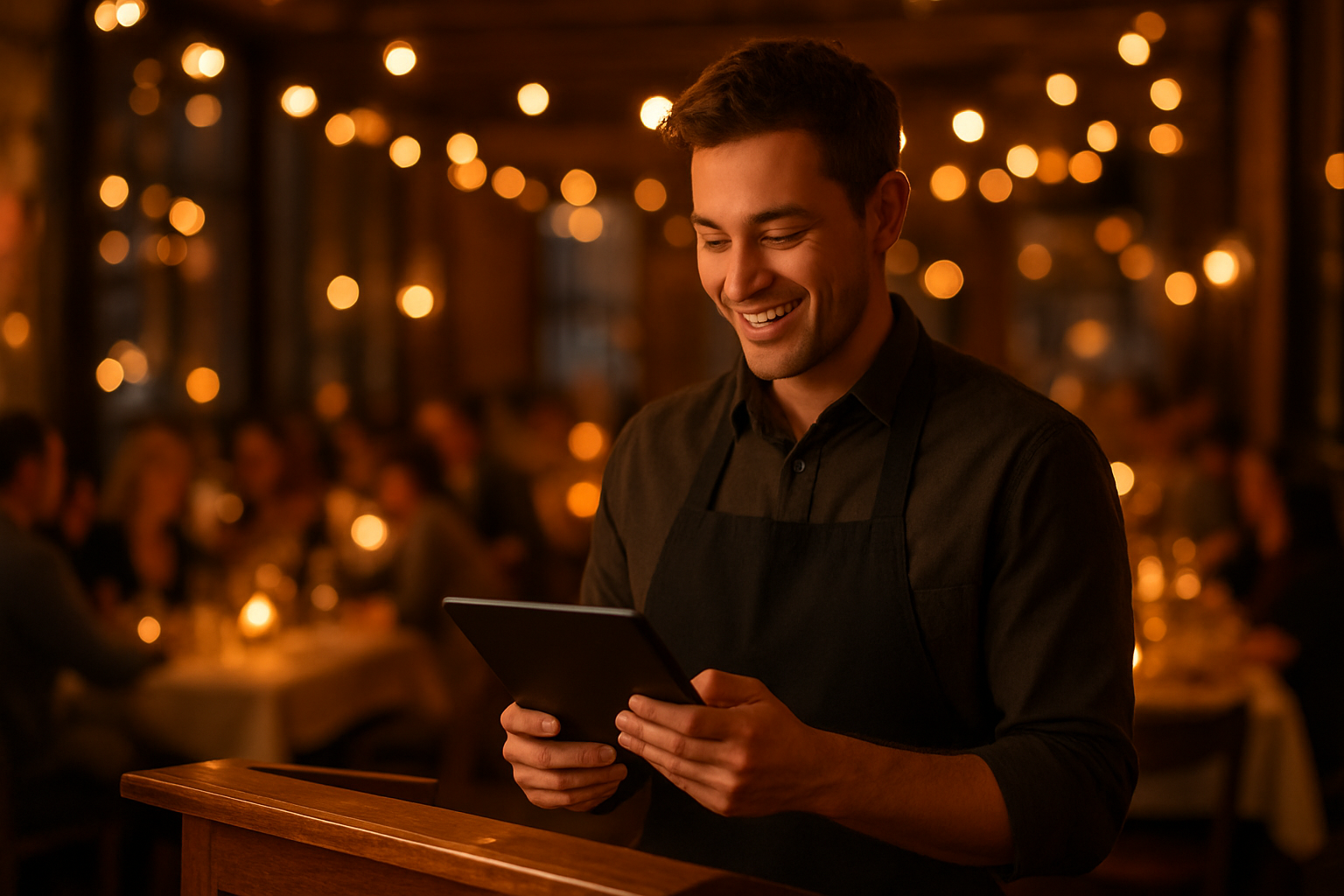
AI for Restaurants: How Food Businesses Are Using AI to Fill Tables and Cut Costs
From reservation bots to AI-driven menu pricing, restaurants are using AI to do more with less — and it's working.
Restaurant profit margins average 3-5%. Every empty table, every no-show reservation, every hour of overstaffing, and every item of food waste directly impacts survival. AI doesn't solve the restaurant business — but it addresses each of these problems systematically, and the cumulative impact is significant. For an owner already stretched across the front of house, the kitchen, and the books, the appeal isn't novelty. It's getting a few real percentage points of margin back without hiring anyone new.
AI chat agents handle reservation inquiries on your website, Google Business profile, and social media 24/7. When a reservation is cancelled, AI automatically contacts the waitlist and fills the slot. Reminder sequences reduce no-shows by up to 30%. The average restaurant leaves 8-12% of reservable capacity unfilled due to communication lag — AI closes that gap.
Automated confirmation messages, reminders 24 hours before, and a final reminder 2 hours before — plus an easy cancellation option that triggers immediate waitlist outreach. OpenTable data shows that restaurants using automated reminder sequences see no-show rates drop from an average of 20% to under 8%. On a busy Friday night, that's often the difference between a full room and a room with three visibly empty tables the whole service.
Post-visit follow-up messages that ask for reviews, share upcoming specials, and invite repeat visits. Regulars who haven't visited in 30 days get a personalized "We miss you" message with a special offer. Birthday and anniversary recognition sequences that bring customers back for special occasions. None of this requires a marketing hire — it runs quietly in the background off data the restaurant already has.
AI analyzes your sales data to identify which items have the highest margin and the highest velocity — and suggests menu placement changes to maximize both. Dynamic pricing recommendations for slow periods can increase off-peak revenue by 15-25%. This is the same logic airlines and hotels have used for decades, just finally accessible to a single-location restaurant instead of only chains with a data science team.
Overstaffing during slow shifts and understaffing during rushes are both expensive — one in wasted labor cost, the other in bad service and lost repeat business. AI forecasting tools look at historical covers, local events, weather, and even day-of-week patterns to recommend staffing levels a week out, instead of a manager guessing based on gut feel and last week's numbers.
AI monitors your Google, Yelp, and social reviews and drafts responses that are personalized, professional, and timely. Consistent, thoughtful review responses increase your average rating and the number of new reviews — both proven drivers of restaurant revenue. A restaurant that responds to every review, good or bad, within a few hours signals something diners notice even if they can't quite articulate why.
Don't try to implement all of this at once. Reservation and no-show automation typically pays for itself fastest, since it directly recovers lost covers. Review response and re-engagement sequences are the next easiest win. Menu pricing intelligence and staffing forecasts matter most once the front-of-house basics are already dialed in.
We set up the AI systems restaurants use to cut no-shows, win back regulars, and protect thin margins.
Talk to Us About Your Restaurant